Fun Fact Friday | The Surprising Story Behind the Post-it Note
Share
Have you ever wondered how the humble Post-it Note came to be? Those little sticky notes have become such a familiar part of everyday life that it's difficult to imagine a desk without them. But their story didn't begin with someone trying to invent a new way to leave reminders. It began with a bookmark that wouldn't stay in place.
An Invention Looking for a Purpose
In 1968, scientist Spencer Silver was working at 3M, experimenting with adhesives. While researching stronger adhesives, he developed something quite different: an adhesive that could stick to a surface but also be removed without leaving a permanent bond.
It was unusual, and Silver believed it had potential. The problem was that nobody was quite sure what to use it for. For several years, he continued sharing his discovery with colleagues, hoping someone would find a practical application.
The Bookmark That Changed Everything
In 1974, another 3M employee, Art Fry, was singing in his church choir. He regularly used small pieces of paper to mark pages in his hymnbook, but they had an annoying habit of falling out. Fry wanted a bookmark that would stay in place without damaging the pages when removed.
Then he remembered Silver's unusual adhesive. What if he could use it to make a bookmark that would stick lightly to paper and could be repositioned whenever needed? He began experimenting with the idea.
As Fry and his colleagues started using the adhesive-backed paper, they discovered something even more useful. They could write messages on the pieces of paper and attach them to documents, then remove them without damage. The idea had grown beyond a bookmark.
From a Simple Idea to a Stationery Favourite
In 1977, 3M began testing the new product in several American cities under the name Press 'n Peel. The initial response was mixed, but when people had the opportunity to try the notes for themselves, their potential became clear.
On 6 April 1980, Post-it Notes were launched across the United States. And that familiar yellow colour? It wasn't originally a carefully planned design decision. According to 3M, the neighbouring laboratory happened to have spare yellow paper available.
What began as a practical solution to a slipping bookmark became one of the world's most recognisable stationery products.
Sometimes the Simplest Ideas Make the Biggest Difference
There's something wonderful about the fact that an everyday frustration inspired a product used by people around the world. A bookmark that wouldn't stay put led to a completely new way of leaving notes and reminders.
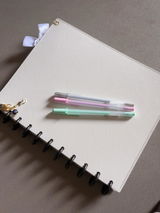
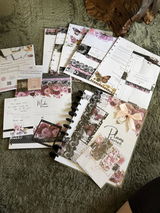
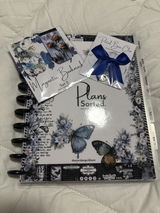
The story also highlights something that remains relevant in stationery today: the freedom to change how we organise information. A discbound planner offers that same flexibility, allowing pages to be moved between sections or taken out and added back whenever they're needed
More than four decades later, Post-it Notes are still finding their way into notebooks and onto desks. All because someone wanted to keep their place in a book.
Curious about discbound planning? Explore how the dream.design.bloom discbound system works.